




- Your cart is empty Browse Shop
การตีความทางกฎหมายเกี่ยวกับ “ระเบียง, เฉลียง และลานบ้าน” ภายใต้กฎหมายควบคุมอาคารของไทย
Exterior architectural elements such as balconies, verandas, and patios play a vital role in the design and functionality of buildings in Thailand. However, from a legal perspective, these three structures are treated entirely differently. They directly impact total floor area calculations (Floor Area Ratio or FAR), setback requirements, safety standards, and construction restrictions under ministerial regulations and local municipal bylaws.
This article provides a comprehensive legal interpretation of these three spaces based on the Building Control Act B.E. 2522 (1979), its subsequent Ministerial Regulations, and the fundamental principles of the Thai Civil and Commercial Code.
Balconies in a Legal Context
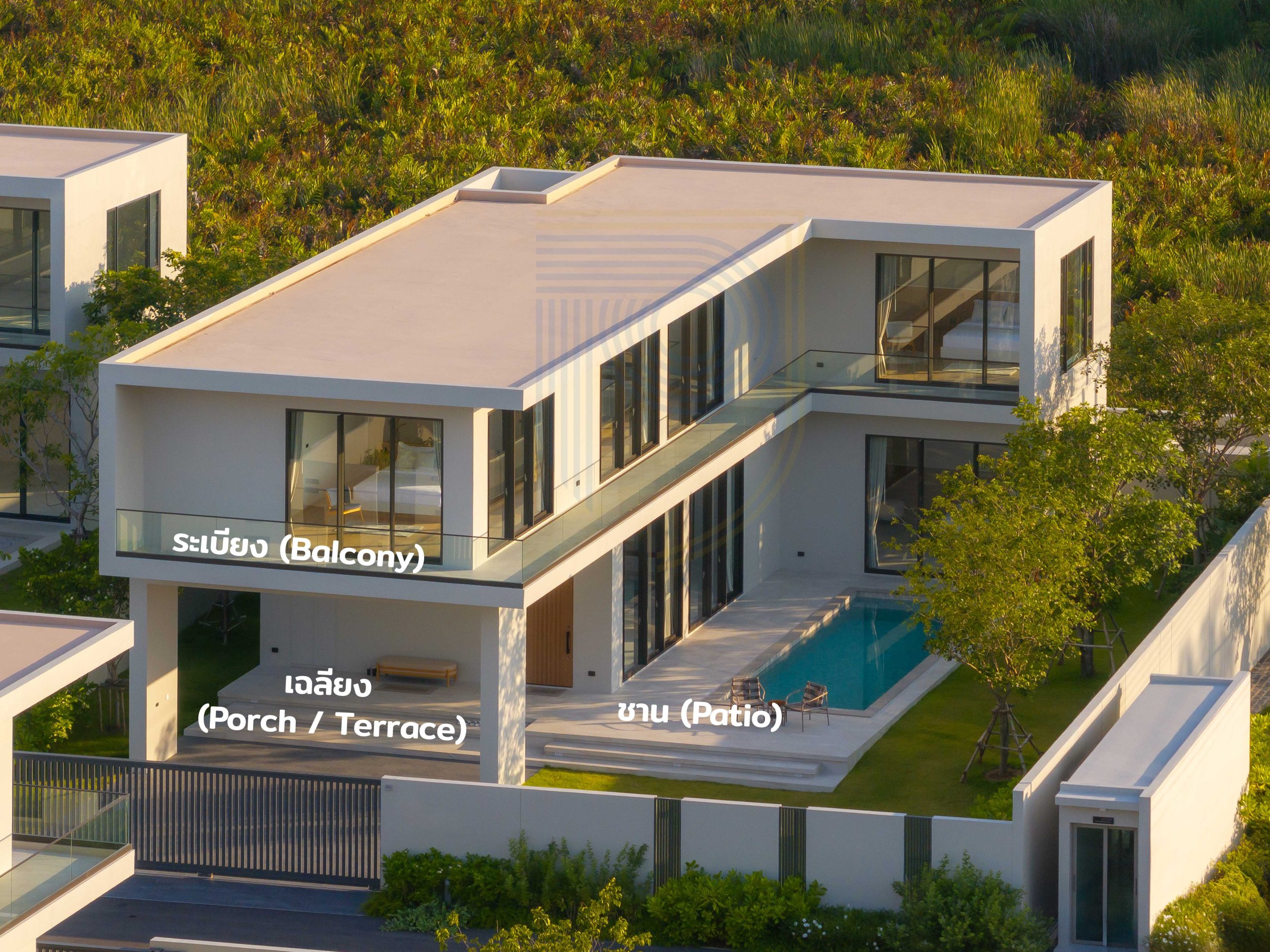
Verandas or Porches in a Legal Context
Patios or Terraces in a Legal Context
Legal Implications for Real Estate Projects and Residential Properties
Conclusion
While balconies, verandas, and patios enhance the livability of Thai homes, Thai building laws treat them through distinct legal lenses:
Balconies: Subject to the highest structural and safety rules (e.g., specific railing dimensions).
Verandas: Directly impact building area (FAR) calculations and require strict setback distances.
Patios: Exempt from building area rules as long as they are unroofed, but strictly governed by neighborly drainage laws.
Understanding these differences ensures that homeowners, architects, and developers can design and build safely, fully compliant with Thai laws, and completely free from future litigation or demolition risks.